
His name keeps coming back, from old parisian skate videos to more recent Thrasher video series or local events like Connect Festival in Bordeaux or Skateholders Forum in Budweis (CZ). And if you follow him on Instagram, you might have noticed he was at Le Dôme in Paris last June. I needed to know more.
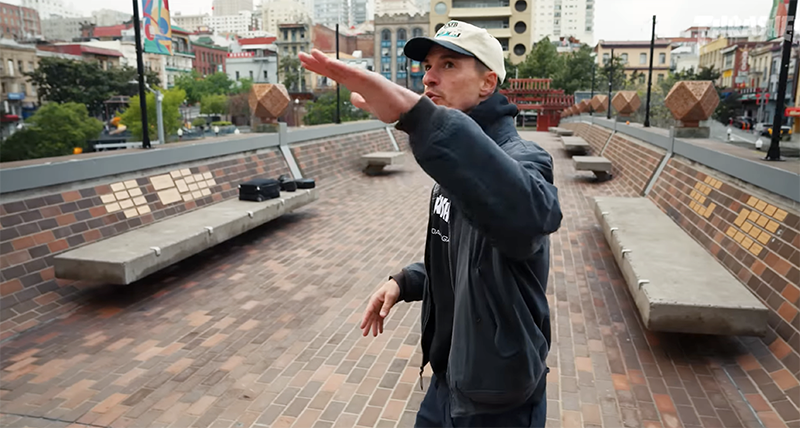


„PARIS SEEMED LIKE THE MOST SOPHISTICATED, SEXY, SKETCHY, AND FASCINATING CITY I’D EVER SEEN.“
You’re quite familiar with Paris as I remember seeing you in some Puzzle video maybe in the late 90’s. What’s your link with the city (and France in general) and how many times have you traveled there?
I took a backpacking trip, typical for most college students, after my first year of university to Europe, and immediately hurt my ankle, on the first day, in London. This was the summer of 1997. So I spent the first month traveling around Austria and Italy, ending with a week in Rome, where I could finally cruise around a little bit on my board. The following week, we were supposed to get to Spain, but because the train workers in the south of France were on strike, we ended up in Paris. Immediately it seemed like the most sophisticated, sexy, sketchy, and fascinating city I’d ever seen. We checked into a hostel for a week, and on the second day I skated from Chatelet to the Eiffel Tower (mostly because it was a landmark I could find), and les bassins were empty and skate-able. How lucky! There I met some kids who took me to Le Dôme, and within a week I was at Bastille, skating with Samir and Salim (Krim), Antoine and Raphael (Cros), Seb (Charlot), Ian (Faure), Benjamin (Deberdt), and Fred DBK. Next year I will have known these guys for 30 years. I have probably been to Paris a dozen times in the last three decades.
How is France perceived from the US on a skateboarding perspective?
Most US skaters rely on the (often wrong, but not always) stereotypes of French people that are generated by US media and culture, but obviously France has had a distinguished presence in global skateboarding. It’s pretty amazing how many good skaters, and how diverse the talent and approach, France has produced. That’s what I think, though I don’t speak for my country, thankfully.
Social media tends to make us think that Americans see Europe as just one big country without realizing the culture differences. How is it in reality?
Social media flattens all context and eviscerates nuance, so of course not all Americans see Europe as one big country. However, Americans also tend not to pick up on cultural nuance and context, so the stereotype stands. One must remember that the United States is so big, and we assume that we are all one giant country (even if our own cultural differences and politics vary from neighborhood to neighborhood, town to town, county to county, state to state, etc.), and European culture and language has developed over thousands of years into the richly diverse and often confusing thing that it is. There are some annoying Americans, like me, who attempt to learn about the culture and speak the language, but that requires a certain level of privilege, education, and empathy to which most Americans don’t have access or interest. We have our own failed empire to attend to.
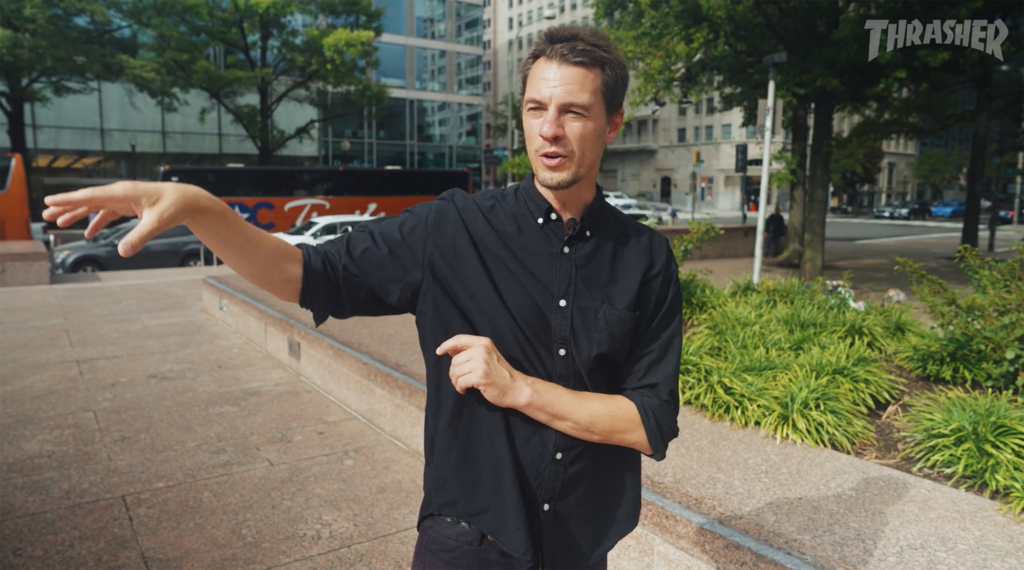
You’ve been traveling around Europe a bit so you might have a better idea of those cultural differences. Any obvious things you noticed when crossing borders?
I used to travel a lot more, and noticed a lot less, so this question would have been easier to answer in 1999. My wife is Swedish, and I spend a lot more time in Denmark and Sweden than I do in France or Spain now. I like Swedish jantelagen, and I love French chauvinism. It’s all exotic to me.
Where are you from?
I was born in a small hippy town in Northern California, grew up in Texas, spent most of my adult life in New York, and now I live in San Francisco with my two cats Bonnie and Beau.
Every time your name comes into the conversation, I’m having a hard time explaining exactly what you do. What’s your background and how would you describe your job today?
I always wanted to be a writer, and I figured that I couldn’t really make a living writing about skateboarding, so I went to graduate school to get my Doctorate (PhD) in Art History. While in school, I wrote a lot, taught university classes, curated art exhibitions, and worked as a historical walking tour guide. I still write about art (mostly reviews and catalog essays), teach art history as an adjunct professor, and now I work on This Old Ledge with Thrasher. These last couple of years have been very fortunate for me, as I have come very close to doing everything I am trained and love to do in my own way.
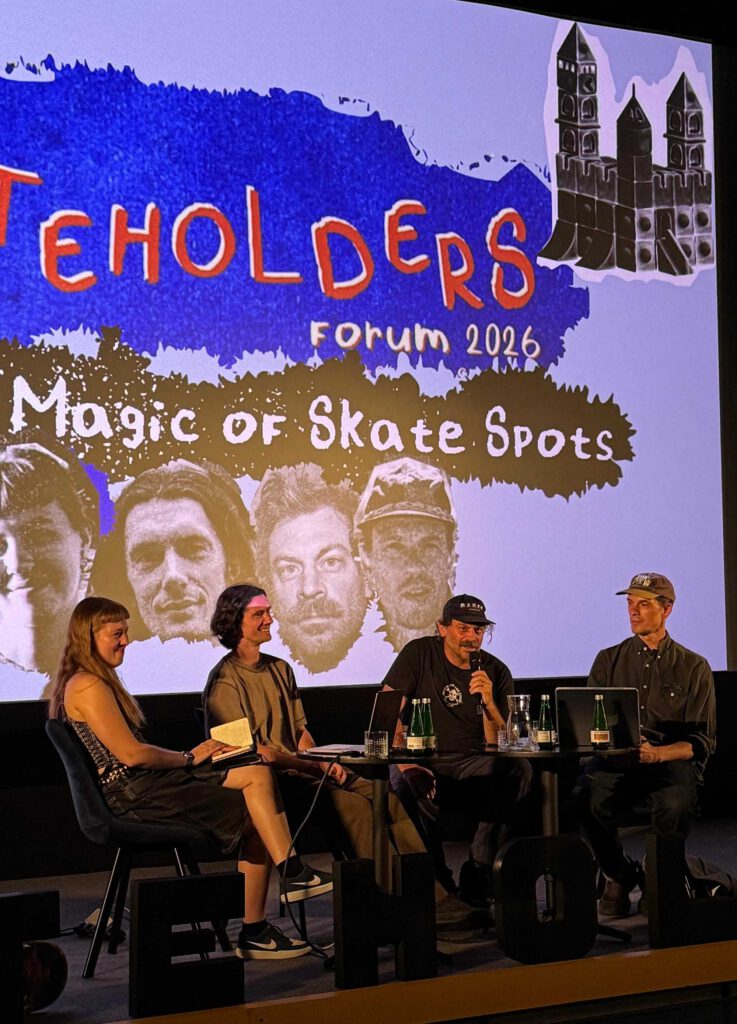
How did the show come about and how does it work ?
As I mentioned, I was a walking tour guide in New York for almost a decade, and it taught me how to look at cities in a certain way: to see clues in the concrete, materials, or fabrication of buildings that would tell something about the city itself. I learned to talk about architecture and culture together, but it never occurred to me to present skateboarding in this way. I moved to SF in 2020, right before the pandemic, and struggled to find a good job that interested me for a few years. Luckily, Tony Vitello at Thrasher Magazine had the idea for me to do little mini-histories of spots in SF on their Instagram, and that turned into my working with Brendan Bill on 15-20 minute episodes.
The way the show works is: I’ll meet with the folks at Thrasher and we’ll see if there are any upcoming trips or places for me to travel to. I have a list of cities that I must do before the series ends, and we’re probably about 3/4 of the way through. Most of these cities are places that I’ve already skated or have spent some significant time in. I then research the spot, watch old videos, try to find out who designed the plazas and buildings that constitute the spot. I’ll interview locals or other stakeholders if possible, but a lot of the labor of the show is just me researching, taking notes, writing a script. Eventually Brendan and I will fly to the spot, spend 3-4 days in the city, and the moment he turns his camera on me I forget everything I studied and pray that the psychobabble that I’m spontaneously spewing might make sense.
After shooting, Brendan spends 3-6 months editing, tracking down clips, and making sure that the facts align. It’s 3% my ideas, 97% his labor.
„I LOVE GRANITE PLAZAS, I GUESS.“
You’ve done quite a few so far. Which one are you the most happy with?
Pulaski and DWP have been my favorites so far. In both, I was noticing new things while we were filming, and their individual histories are so unique, yet they’re both emblematic of something much larger, to me. Pulaski (Freedom Plaza, Washington DC) is about as fundamental a spot as you could imagine (flatground, curbs, 3 steps, ledges) yet generations of locals have made it this incredible destination plaza. DWP was always too much of a bust to become a chill plaza, and the water around it makes it hard to not lose your board, but the place has a powerful aura that is apparent to anyone who visits. I love granite plazas, I guess.
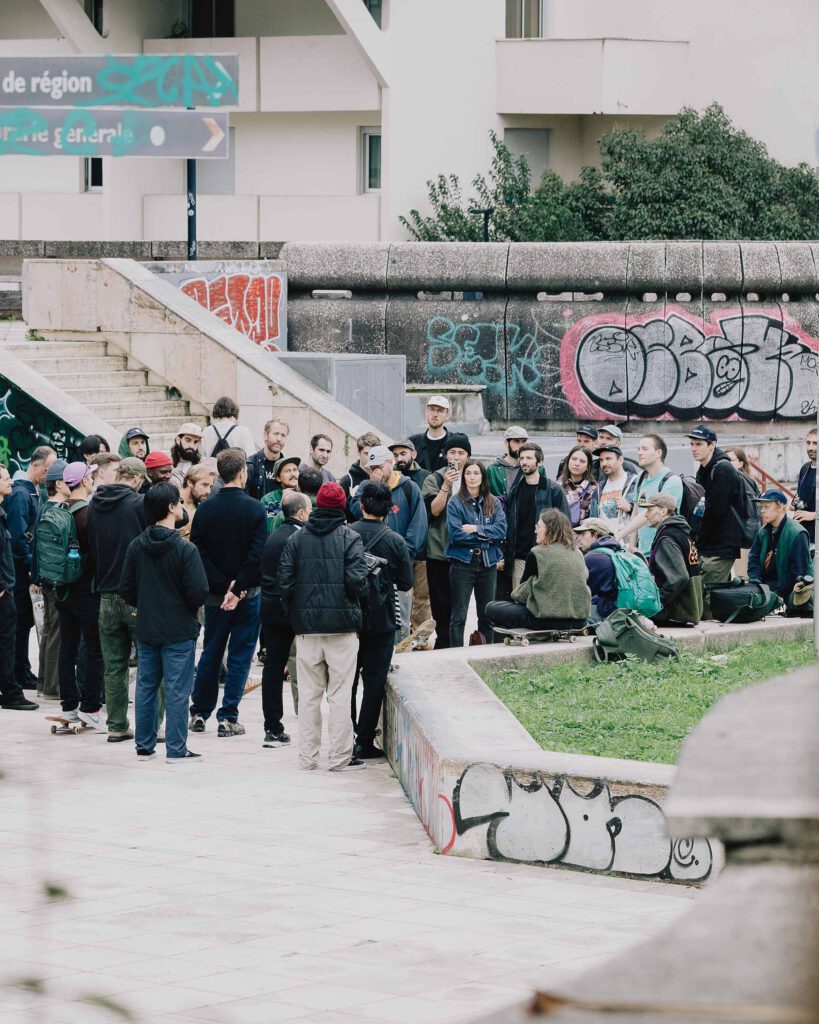
Is there a specific one you’ve been trying to do but is just not happening?
We have shot a version of the Seagram Building episode every time I’ve been to New York, and nothing has come out yet. It’s the great regret of my life, because I am obsessed with that building and plaza.
I know you’re working on a Le Dôme one. I did a special issue about it 10 years ago. Back then Flo Marfaing was still the king of Le Dôme… What has changed now?
I loved that issue, and thank you for sharing it with me. I learned a lot. Flo is still the king of Le Dôme as far as I can tell. Maybe some more dangerous tricks have been done by others, but nobody comes close to technical power, creativity, and all-encompassing approach. King Flo forever! I only skated Le Dôme a few times in the 90’s, so I can’t really say if this was true back then, but it was really nice this last week to see Tony Broussard, Franck Barratiero, Vassily, and a handful of other locals, young and old, really hanging out there and using it as a plaza. I’m sure it was always like that, but as I get older, I think a lot more about what these places mean to use over time, and why we keep going back to the same ones.
I always knew that Le Dôme was where all the best skaters in Paris hung out, but I didn’t really consider that a lot of those guys weren’t from that part of Paris, and many came from the suburbs. I think it’s really cool that these skaters, many of whom may not have felt welcome in all parts of Paris (don’t want to speak for anyone here, it’s just a hunch) managed to make this exalted plaza between two museums, on the bank of the Seine with one of the best views of the Eiffel Tower anywhere, their home. The level of skateboarding has always been really high, especially in France, but that lifelong devotion to one spot, and the fact that these guys have known each other for over 3 decades, is really special. Maybe nothing has changed, it’s always been like that, but it was profoundly touching for me to see that. What a cool scene!
When is it out?
Could be anywhere from 3 – 18 months, depending on how quickly we can get the footage. That depends on Fred Mortagne, I suppose…
Interview done by email in June 2026